Institutional Packet / Exhibition Overview
An American Son:
A Poetic Symbolic Account of a Life in America
Oscar Eduardo de Paz
Chris White Gallery, Wilmington, Delaware · April 10 – May 22, 2026
"A body of work exploring family memory, American identity, social pressure, survival, and the symbolic worlds carried inside ordinary life."
Executive Overview
The Exhibition
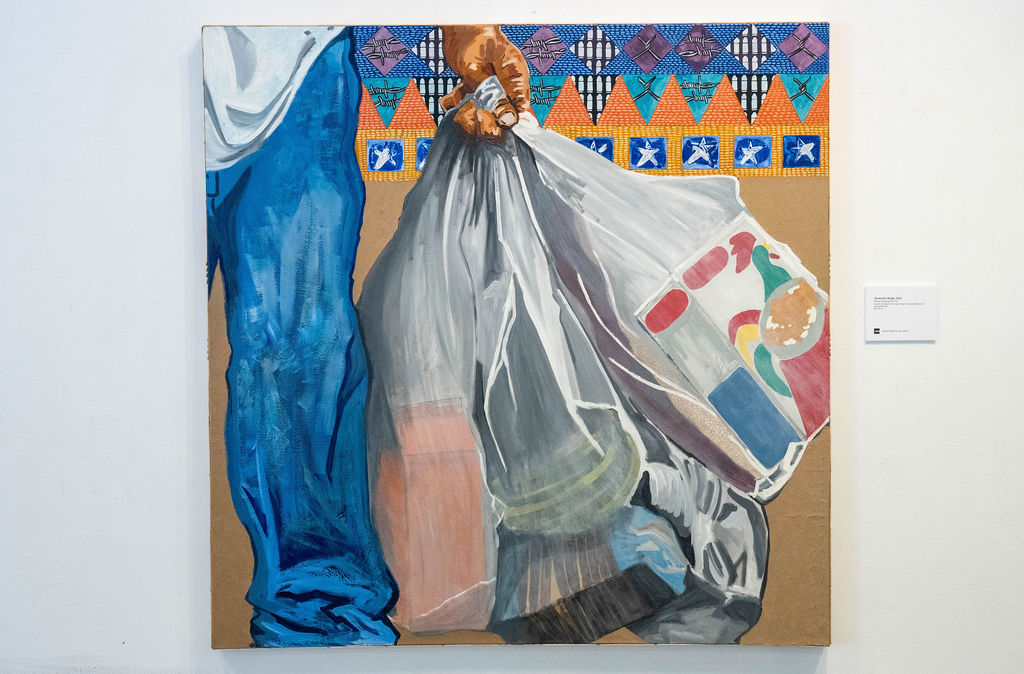
An American Son: A Poetic Symbolic Account of a Life in America is the debut solo exhibition of Oscar Eduardo de Paz at Chris White Gallery in Wilmington, Delaware. The body of work, developed across more than a year of intensive studio research, comprises large-scale casein paintings integrated with collage, found objects, blackout poetry, and textile references. Organized across six chapters, it traces a single life from childhood in Chicago's north side to the artist's studio practice in Delaware.
The exhibition is not a protest. It is a record. De Paz transforms the specific materials of a particular life, a backpack held to the chest, a cassette tape, a popsicle stick, a hand raised in fear, into symbols that speak across the distance between personal experience and shared social reality. In doing so, the work invites viewers into a form of recognition that is both intimate and structural.
The six chapters, Survival and Resilience, Disruption and Dislocation, Finding Agency, Acts of Repair, Self-Discovery and Emergence, and Stepping into Purpose, function as a bildungsroman in paint and poetry. Together they constitute an argument: that the lives of those who have navigated systemic pressure, migration, and racial violence are not defined by that pressure, but enlarged by their response to it.
An American Son is available for institutional engagement across multiple registers: acquisition of individual works, future exhibition loans, artist talks, public programming, classroom visits, student critiques, and collaborative programming. The exhibition has generated serious critical attention and marks a significant moment in the artist's developing trajectory.
Institutions seeking to deepen engagement with contemporary American painting, social memory, migration narratives, or interdisciplinary humanities are invited to contact the studio directly.
Framework
Painting as Memory, Evidence, and World-Building
"My work begins with the question of who gets to be seen, and under what conditions."
— Oscar Eduardo de Paz
Painting as Memory Carrier
De Paz paints not from imagination but from witness. The canvases are built from remembered materials, objects, gestures, spaces, that carry the weight of lived experience. The surface itself becomes an archive.
Family History as Social History
The kitchen table, the backpack, the grandmother's hands, these are not merely personal images. They are social records of labor, care, and survival under structural pressure. The work refuses the separation between private life and political reality.
Objects and Materials as Evidence
Popsicle sticks, cassette tapes, textile references to Latin American craft traditions, found and collaged materials are embedded directly into the painted surface. They function as evidence: proof that this life happened, that these objects existed, that they mattered.
Ordinary Spaces as Sacred and Political
De Paz treats rooms, intersections, playgrounds, and stoops as sites of as much significance as any formal institution. His paintings insist that the ordinary spaces of working-class and immigrant life are sacred, worthy of attention, documentation, and aesthetic seriousness.
Poetic Symbolic Realism (PSR)
The PSR framework, Poetic, Symbolic, Realist, governs all of de Paz's work. The poetic allows for ambiguity and emotional resonance. The symbolic transforms everyday objects into carriers of larger meaning. The realist insists on specificity: real places, real labor, real bodies. All three registers operate simultaneously in every painting.
Social Justice as Embedded, Not Sloganeered
The work does not announce its political commitments. It enacts them. By treating the lives of people who have experienced systemic violence as subjects worthy of serious aesthetic treatment, the work performs its most radical act.
Exhibition Statement
An American Son: What the Title Carries
"To be An American Son is to carry two inheritances simultaneously: the promise of belonging, and the weight of its conditions."
The title names an experience that is both specific and widely shared. De Paz was born in Chicago to a father whose family emigrated from Guatemala, raised in part by his grandmother, shaped by the north side of Chicago, by its intersections, its schools, its encounters with police, its libraries and its walls. An American Son is the account of that formation.
The exhibition asks: What does it mean to grow up in the in-between? Between cultures, between languages, between the American promise and its material reality? What objects does that life produce? What marks does it leave on the hands?
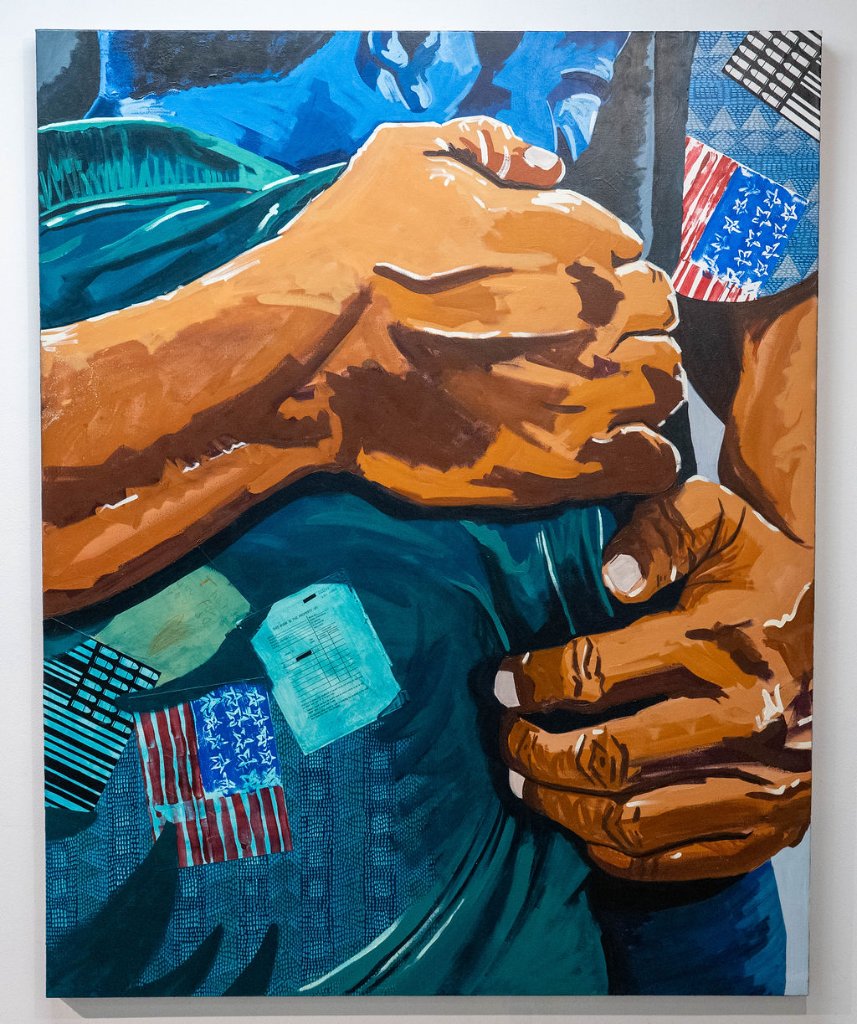
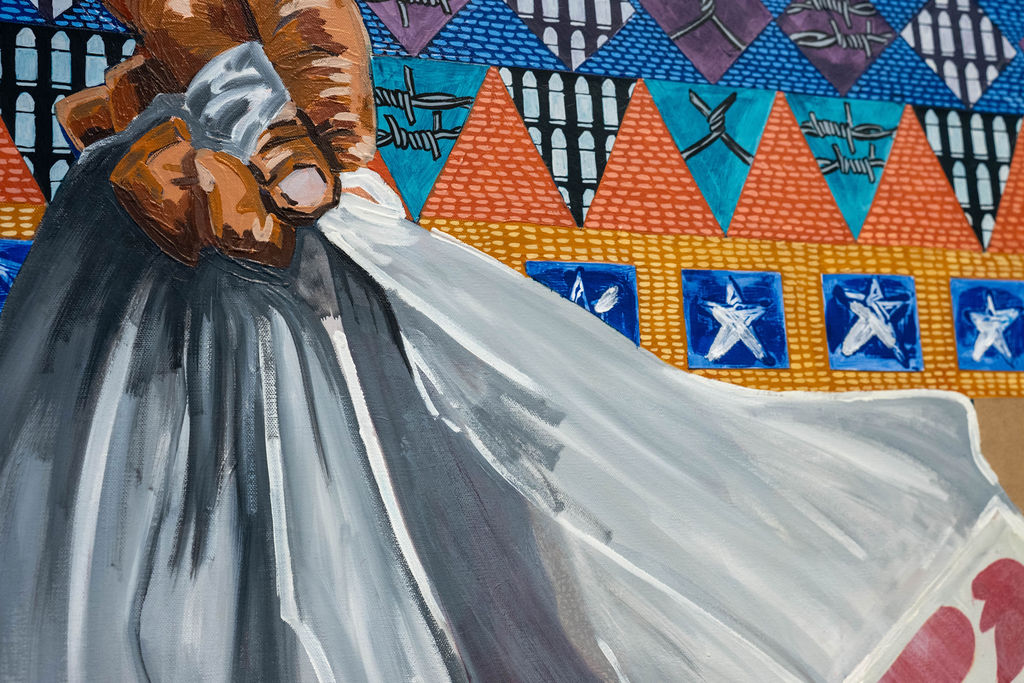
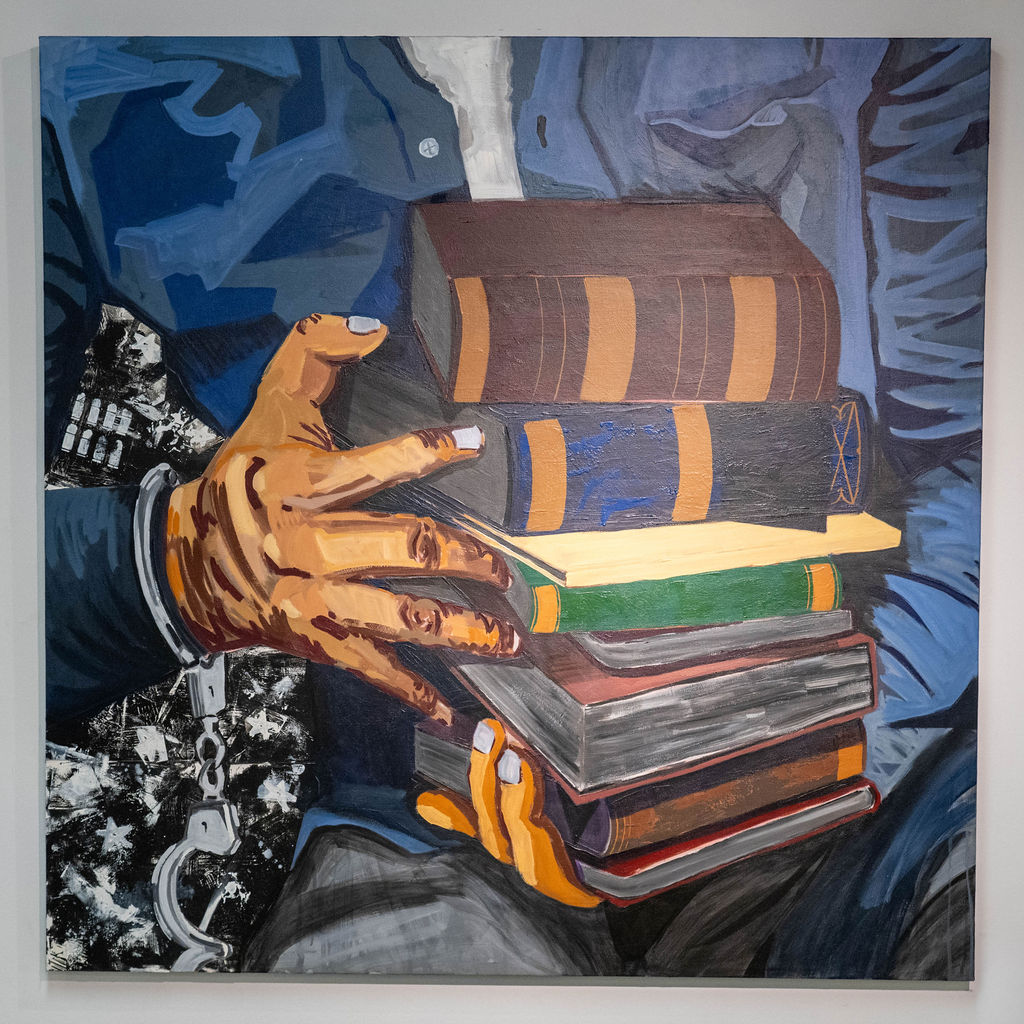
Hands are a recurring formal and symbolic element throughout the work. Cropped, enlarged, performing tasks, writing, threading, clutching, they appear throughout the six chapters as carriers of labor, fear, care, memory, and self-protection. They are both portrait and evidence.
The paintings, poems, objects, and surfaces work together as a single system. Casein, a medium similar to acrylic but with a distinct matte texture that rewards attention, is applied in large brushwork that creates fields of color and atmosphere. Into these fields, collaged drawings, found documents, textile references, and blackout poems are incorporated as structural elements, not decorative additions.
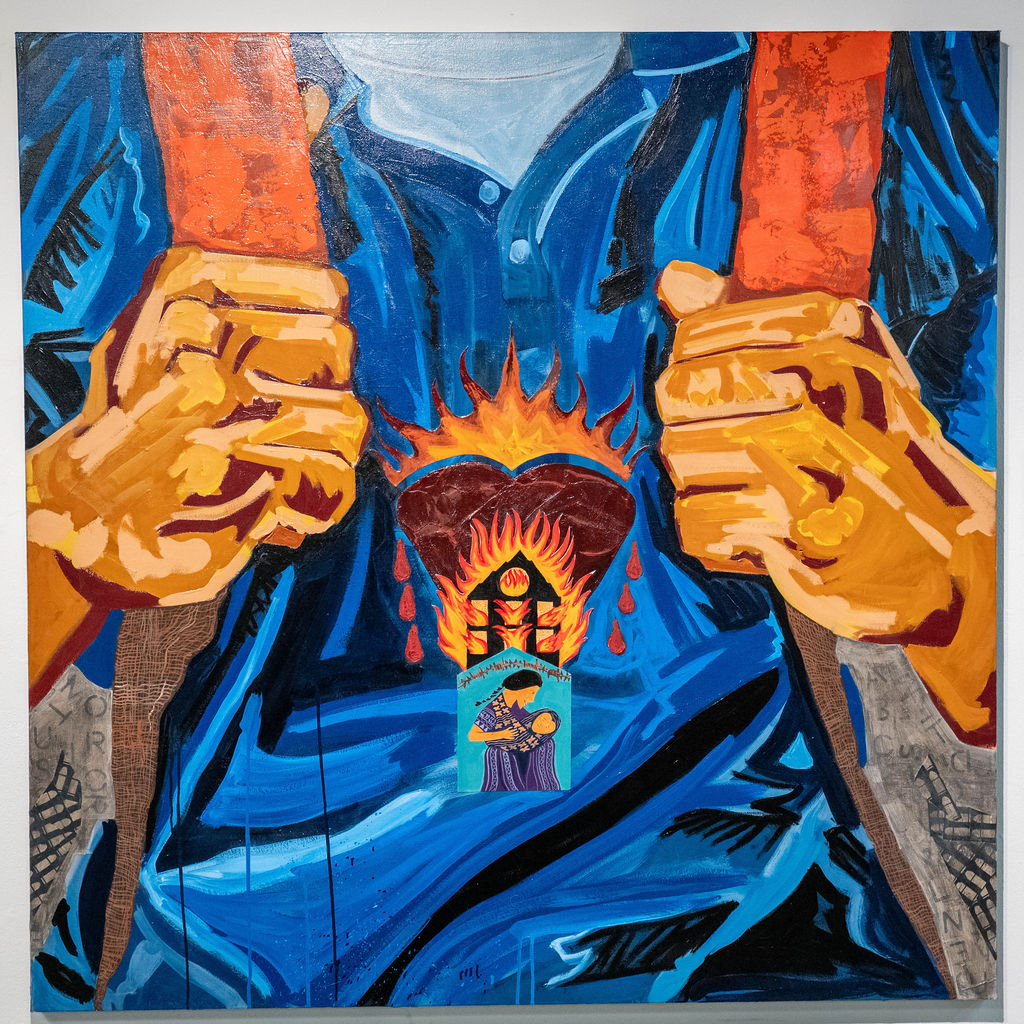
Symbols of American culture, the flag, the Sacred Heart, a Wu-Tang Clan pin hanging from a backpack, appear throughout, not as irony, but as sincere markers of a culture that is genuinely the artist's own. The work refuses to perform alienation from American life while insisting on the full complexity of belonging to it on unequal terms.
Rather than situating struggle as the predominant reference, de Paz exalts un-extraordinary moments of joy, play, and peace as equally worthy of portrayal, arguing implicitly that the capacity for happiness in the midst of systemic pressure is itself a form of resistance. This is the exhibition's most radical claim, and its most human one.
An American Son is de Paz's most sustained and ambitious work to date. It is also his most personal. That combination, the autobiographical and the structural held in the same frame, is what gives the exhibition its particular weight and enduring relevance.
Selected Works
From the Exhibition
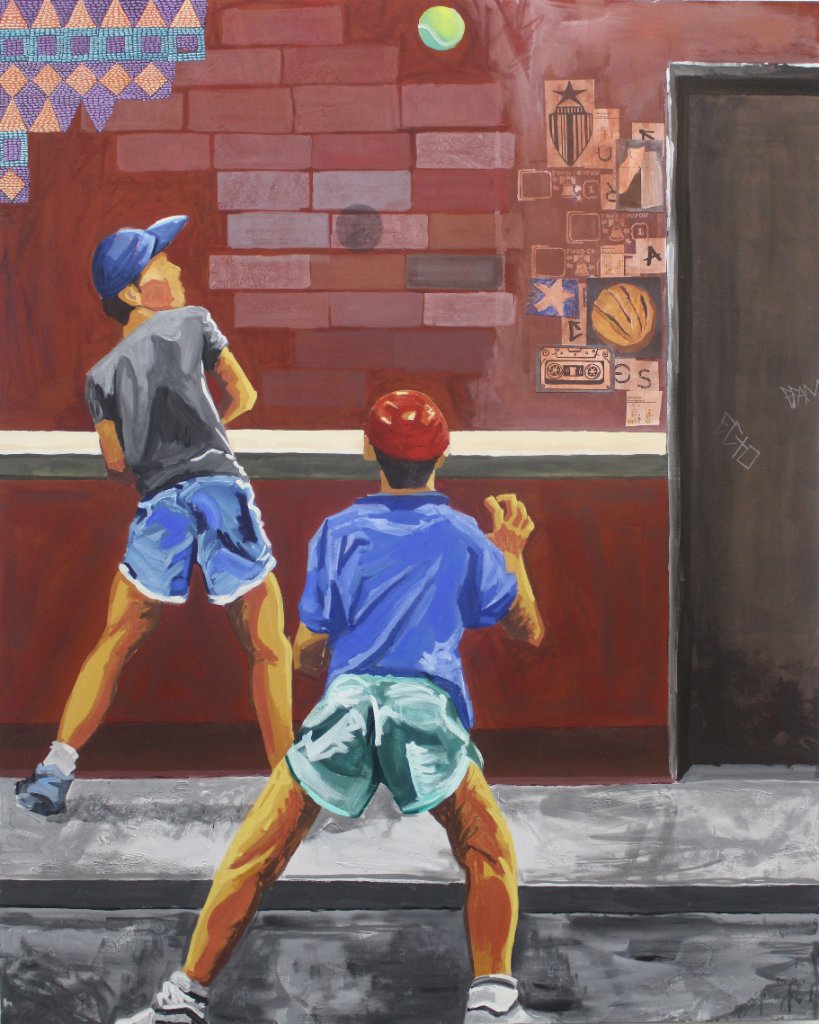
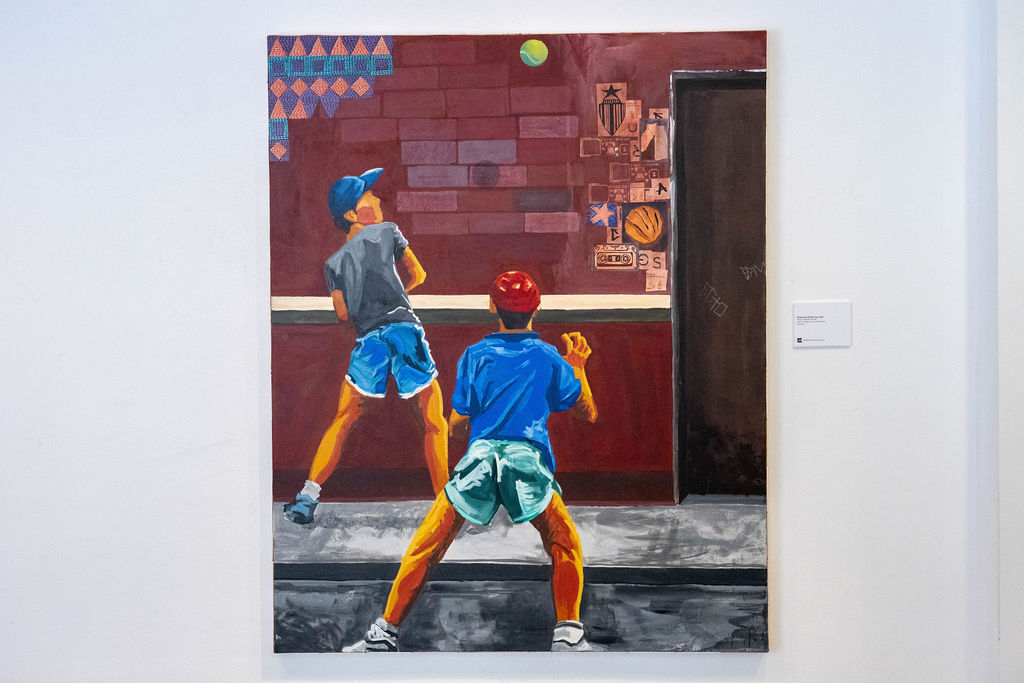
Chapter 1 — Survival and Resilience
Bittersweet Child's Play
2025
Casein, collaged drawings, acrylic medium
48 × 60 in
Inquire
Two young men play wall-ball in a gesture that is simultaneously joyful and weighted. The scene holds the tension between ordinary childhood pleasure and the broader social pressures that surround it, a recurring dynamic throughout the exhibition.
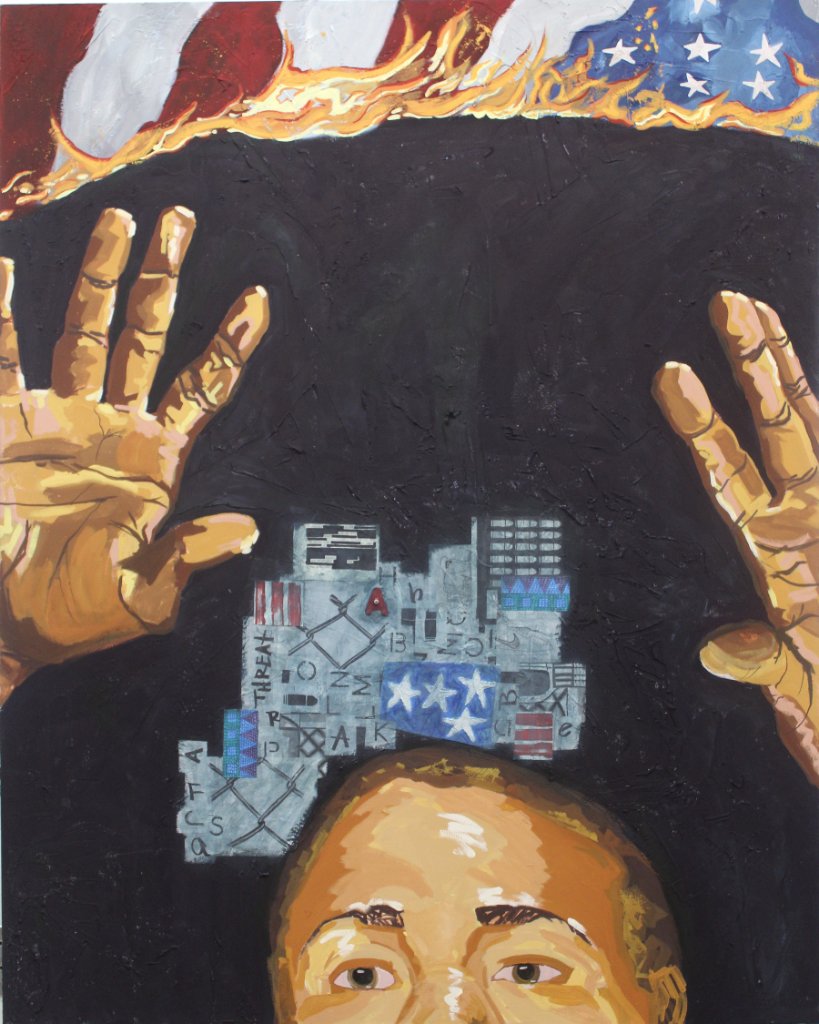
Chapter 2 — Disruption and Dislocation
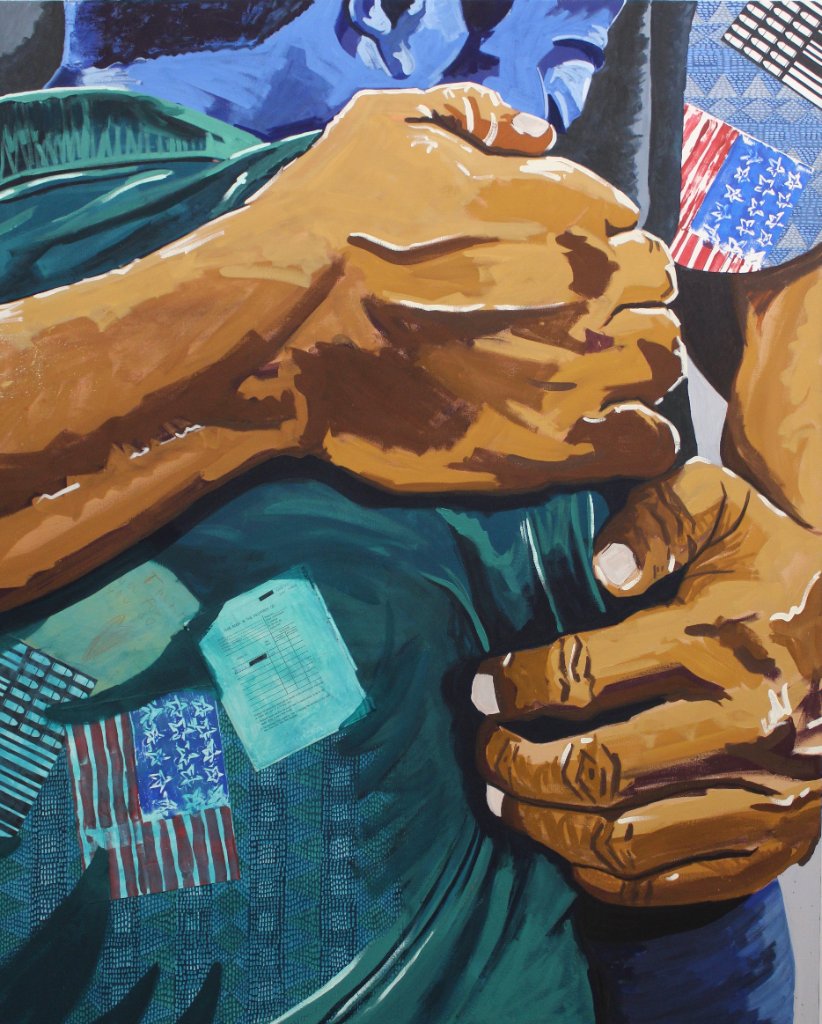
Allegiance Arrested
2025
Casein, collaged drawings, found objects, blackout poem, acrylic medium
48 × 60 in
Inquire
A young man raises his hands in response to an unseen threat. The title inverts the language of civic loyalty, asking what it means to pledge allegiance to a system that registers your body as suspect. One of the most discussed works in the exhibition.
Chapter 3 — Finding Agency
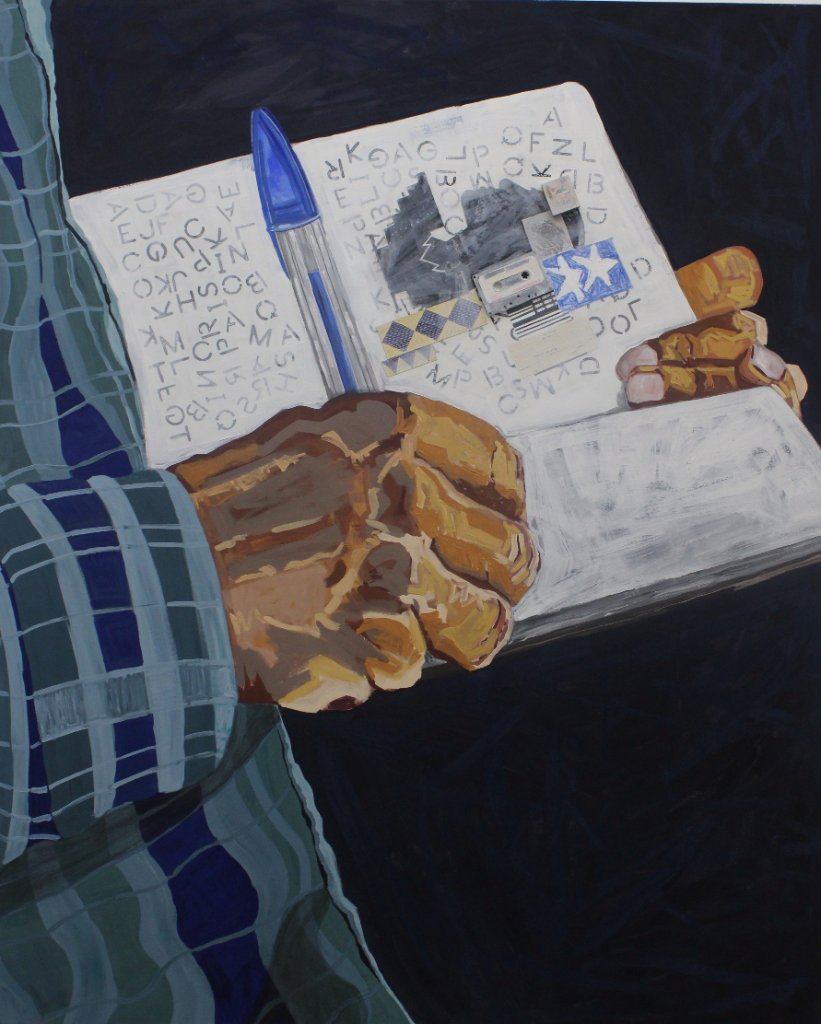
The Pen and the Pad
2025
Casein, collaged drawings, found objects, blackout poem, acrylic medium
48 × 60 in
Inquire
Writing as resistance. The work positions authorship, the act of putting words and images on a surface, as a primary form of agency in an environment that systematically denies it. The blackout poem embedded in the composition is both material and meaning.
Chapter 4 — Acts of Repair
I'm Working on It (Wear Your Heart Out)
2025
Casein, collaged drawings, found objects, acrylic medium
48 × 60 in
Inquire
The labor of emotional and psychological repair rendered as physical act. Hands occupy the surface in the ongoing work of putting things back together, an intimate meditation on persistence that operates simultaneously as autobiography and collective testimony.
Chapter 5 — Self-Discovery and Emergence
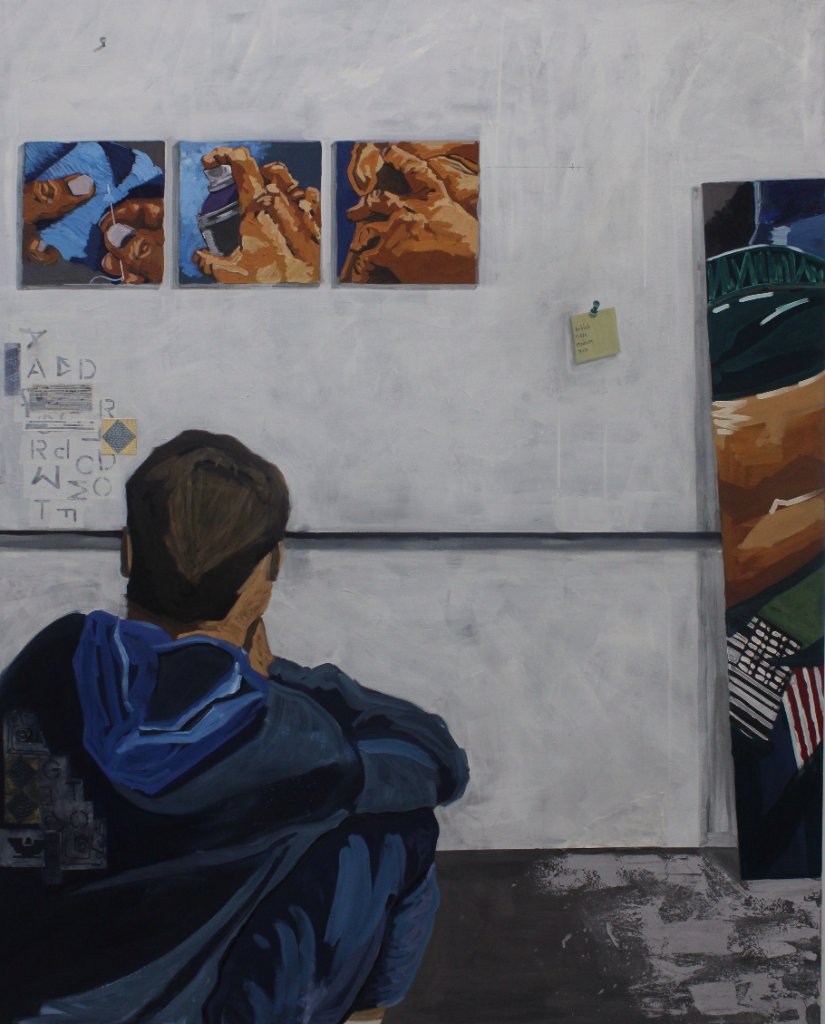
Cocooned Reflection
2025
Casein, collaged drawings and documents, blackout poem, acrylic medium
48 × 60 in
Inquire
The turning inward that precedes emergence. Collaged documents, fragments of official language and personal records, are incorporated into the surface, dissolving the boundary between institutional identity and self-understanding.
Chapter 6 — Stepping into Purpose
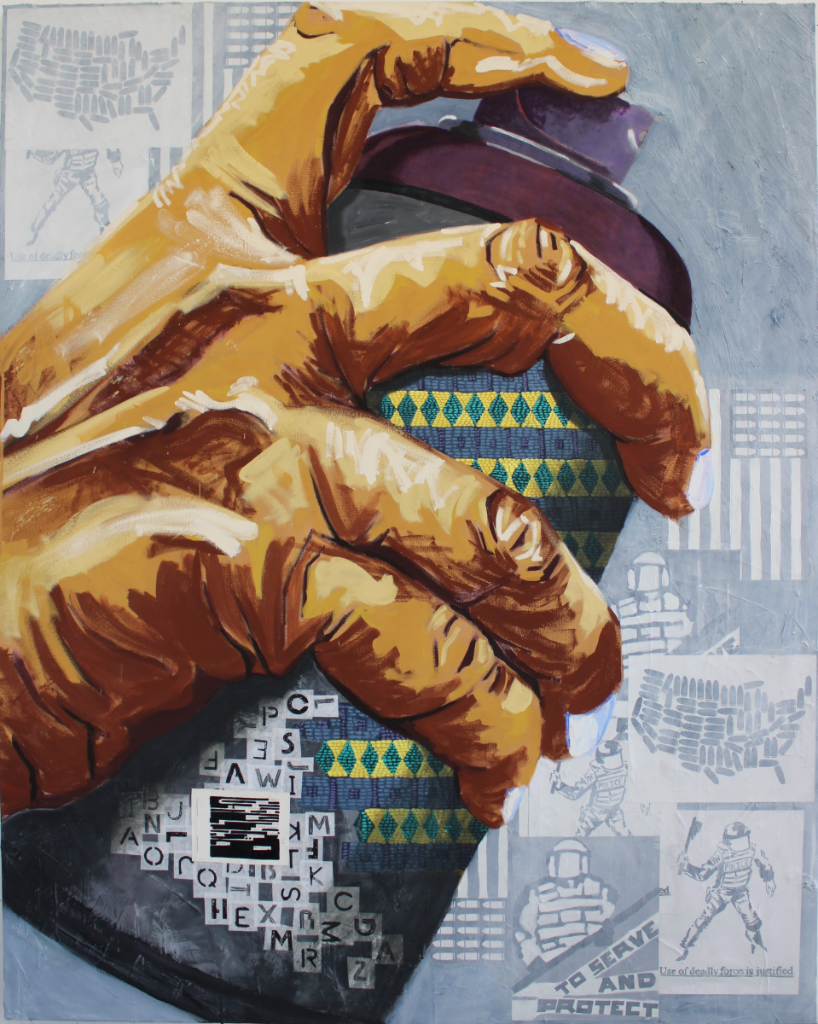
Creative Destruction
2025
Casein, collaged drawings, blackout poem, acrylic medium
48 × 60 in
Inquire
The closing chapter declares arrival. The studio becomes a site of transformation, not escape from the preceding narrative, but its culmination. The work asserts that making is itself a political and spiritual act.
Exhibition Environment
A Constructed World
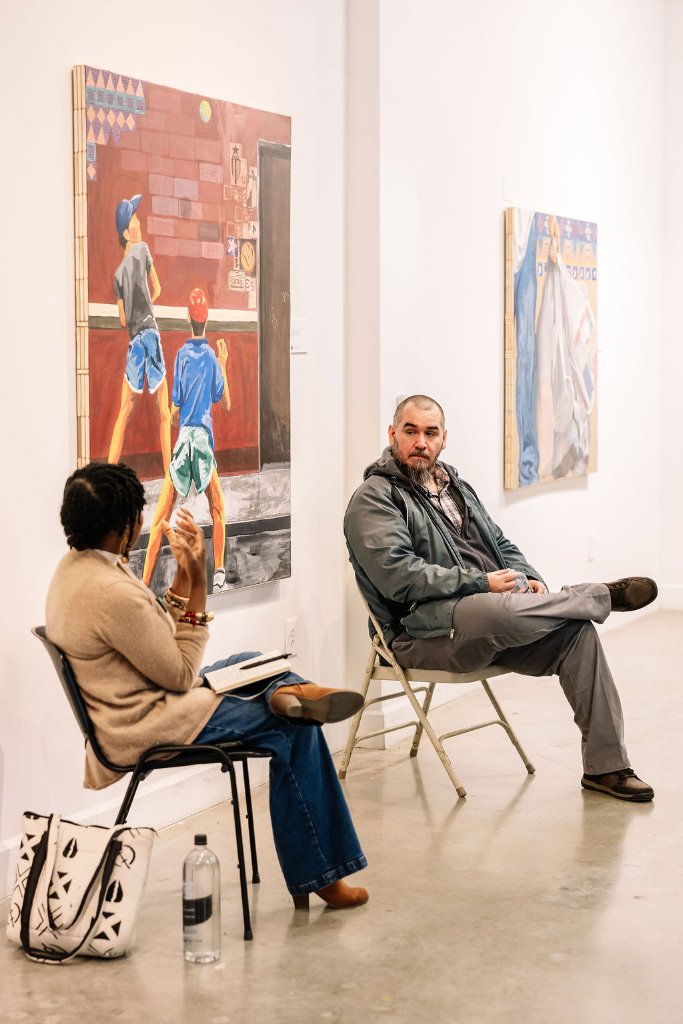
An American Son is not a collection of paintings. It is a constructed world. The relationship between the individual canvases, the embedded poetry, the space of the gallery, and the sequence of the chapters creates an environment of memory, pressure, survival, and reflection that rewards extended engagement.
Visitors to Chris White Gallery experienced the work across a series of rooms in which the paintings' formal relationships, scale, proximity, the direction of figures' gazes, created a sense of continuous narrative. The sequence was deliberate: the six chapters were designed to be moved through slowly, in conversation with the text embedded in the surfaces and the statements positioned throughout the space.
The exhibition is available for institutional re-staging, with full support from the artist for installation planning, accompanying programming, and contextual framing. Modular configurations featuring selected chapters rather than the full body of work are also available for institutions with space constraints.
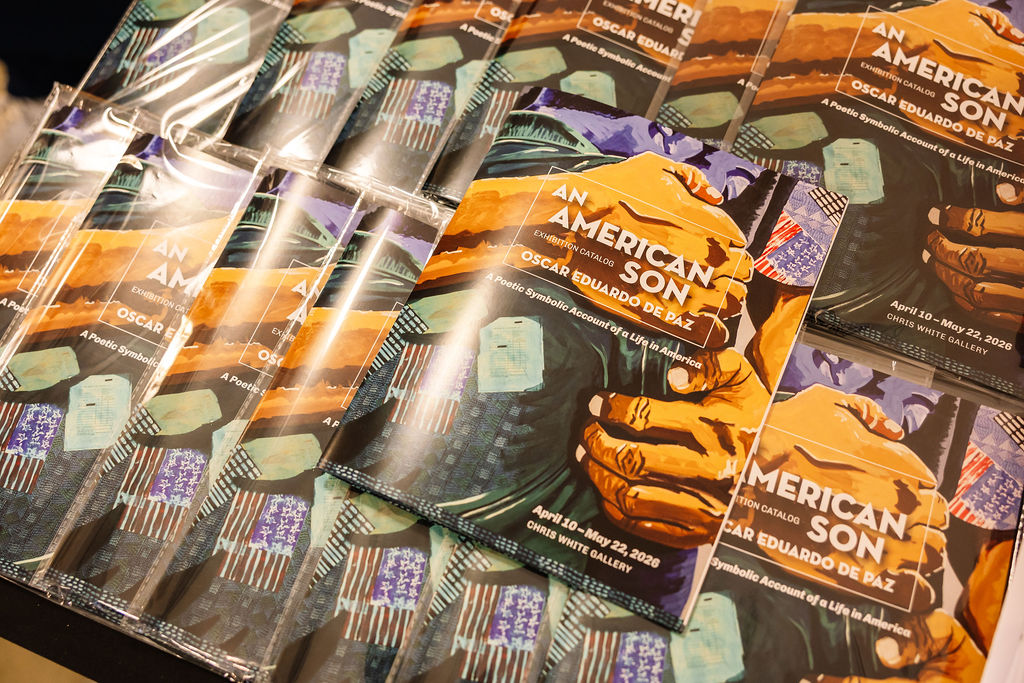
Exhibition catalog
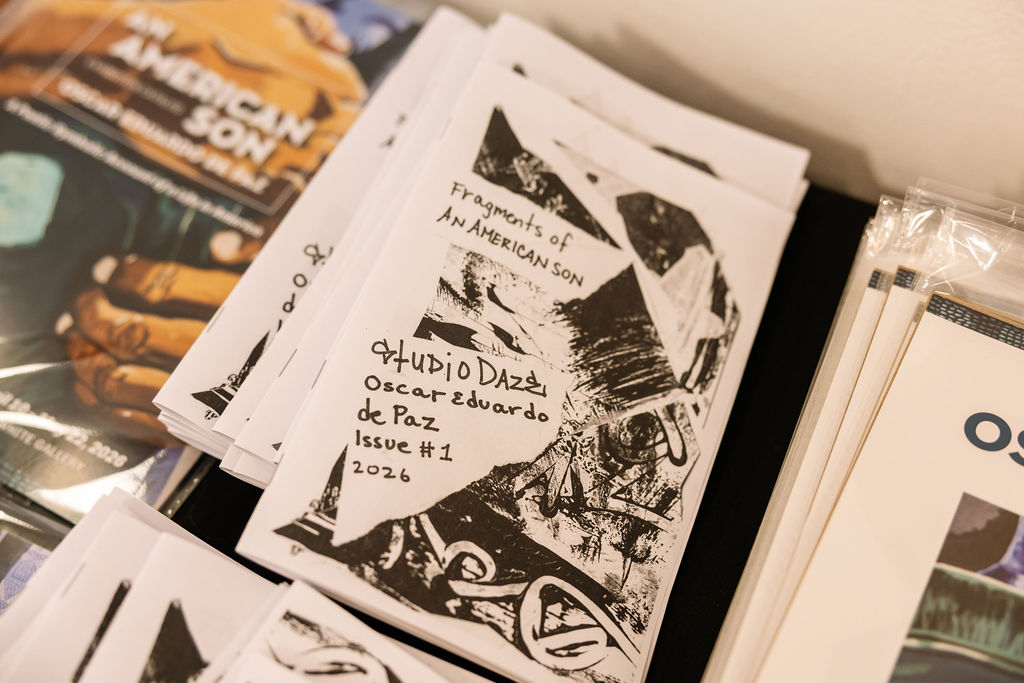
Studio Daze, Issue #1 — Fragments of An American Son
Critical Essay
An American Son
Angela N. Carroll
Exhibition Essay, 2026
"Rather than situating struggle as the predominant reference for his experience, de Paz exalts un-extraordinary moments of joy, play, and peace as worthy of portrayal. For him, the mundane moments of those who have endured what the artist has termed 'systemic suffering' are the most miraculous."
Carroll's essay, written for the exhibition catalog, positions de Paz's practice within a critical tradition of socially engaged American painting while arguing for the specificity and originality of his PSR framework. The essay draws on direct engagement with the artist and the work in progress, offering interpretive framing that has already become part of how the exhibition is received and discussed.
The existence of a substantial critical essay by a practicing academic and curator at the moment of the exhibition's debut signals the seriousness of the work's reception. It is available to institutions as part of the exhibition catalog.
Institutional Relevance
Why This Work Matters to Institutions
An American Son supports programming across studio art, art history, museum studies, Africana studies, Latinx studies, sociology, criminal justice, education, English and creative writing, public humanities, and social justice and community engagement.
Engagement
How Institutions Can Engage
Acquisition
Individual works from An American Son are available for consideration by university, museum, and public collections. Priority works are identified in the Acquisition section below.
Exhibition Loan
Selected works or the full body of work are available for institutional exhibition. The artist is available to support installation, programming, and contextual framing.
Future Exhibition Opportunities
The studio is open to conversations about future solo or group exhibitions at university galleries, museums, and alternative spaces. Contact directly to discuss.
Artist Talks
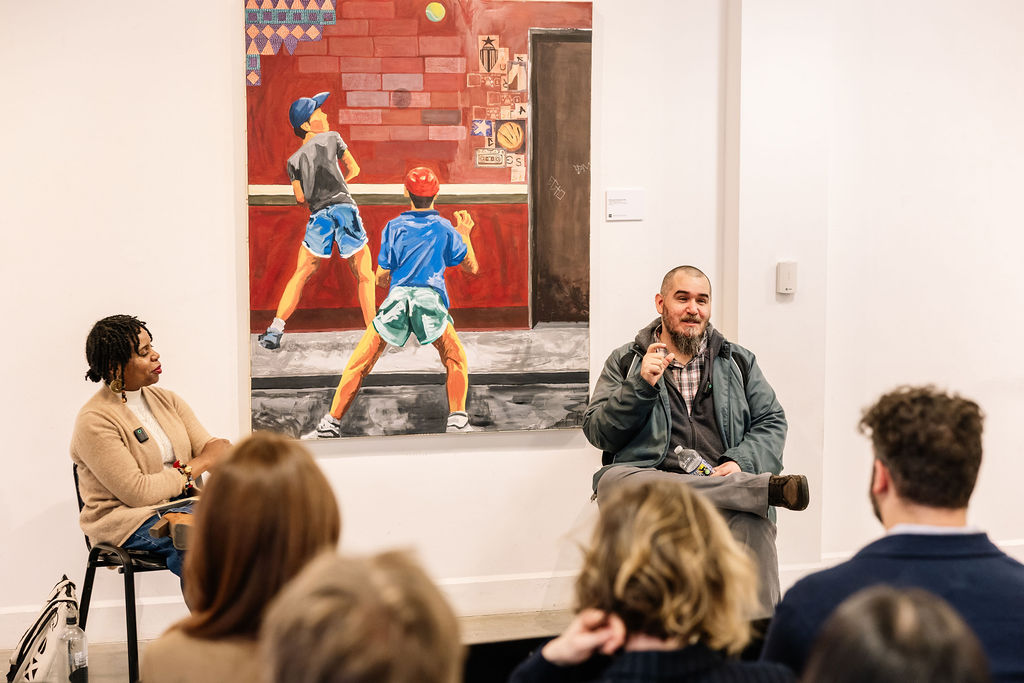
De Paz speaks on his practice, the PSR framework, social justice as embedded in lived experience, the relationship between painting and writing, and the role of art in public life.
Classroom Visits & Critiques
Available for studio visits with MFA or undergraduate students, critiques, and classroom presentations. Particularly effective in studio art, art history, and interdisciplinary humanities contexts.
Poetry & Painting Workshops
Given the integration of blackout poetry and visual art in the work, de Paz is available to lead interdisciplinary workshops connecting writing and visual practice.
Public Conversations & Panels
Available for public humanities events, symposia, and panel conversations on contemporary American painting, migration, identity, social justice, and interdisciplinary practice.
Studio Visits
Available by appointment at the Delaware Contemporary. Studio visits are particularly recommended for collectors, curators, and institutional representatives exploring acquisition or future exhibition.
Collaboration: Sacred Spaces
Institutions interested in early engagement with the next body of work, Sacred Spaces, are invited to contact the studio to discuss future collaboration opportunities.
Acquisition
Acquisition Consideration
A work from An American Son acquired now, at the moment of this exhibition's first presentation, preserves a pivotal chapter in the development of an artist whose practice is gaining significant regional and national recognition. De Paz is held in the collections of the Delaware Art Museum and Nemours; has been commissioned by the Delaware Art Museum; and has developed his work through residency at The Delaware Contemporary. His next institutional appearance includes a collaborative exhibition at Charlie James Gallery in Los Angeles.
Works from this body of work are directly teachable, their structure, material complexity, and thematic range make them productive across multiple disciplines. They are also visually strong in institutional contexts: large-scale, formally sophisticated, and capable of anchoring a collection's engagement with contemporary American painting, migration narratives, and socially engaged practice.
Acquisition of even a single work places the institution in conversation with one of the most significant ongoing bodies of work being produced in the mid-Atlantic region. It also positions the institution as an early supporter of a practice whose trajectory is clearly upward.
Priority Works for Acquisition Consideration
Allegiance Arrested
Pricing available upon request
Bittersweet Child's Play
Pricing available upon request
I'm Working on It (Wear Your Heart Out)
Pricing available upon request
Creative Destruction
Pricing available upon request
The Pen and the Pad
Pricing available upon request
Current Trajectory
An Active Practice
Next Chapter
Sacred Spaces
"If An American Son examines inheritance, pressure, violence, family memory, survival, and American identity, Sacred Spaces asks where survival becomes ritual."
The next body of work, currently in development, asks where ordinary rooms become sites of resilience, where family memory becomes a form of resistance, care, and revolution. Sacred Spaces extends the PSR framework into new territory: the domestic interior as both refuge and battleground, the rituals of everyday life as ceremonies of survival and self-determination.
An American Son is not an isolated exhibition. It is one chapter in a larger unfolding practice. Institutions that engage with the work now are engaging with an artist whose most important work is still being made. The studio is open to early conversations about future exhibition opportunities around Sacred Spaces.
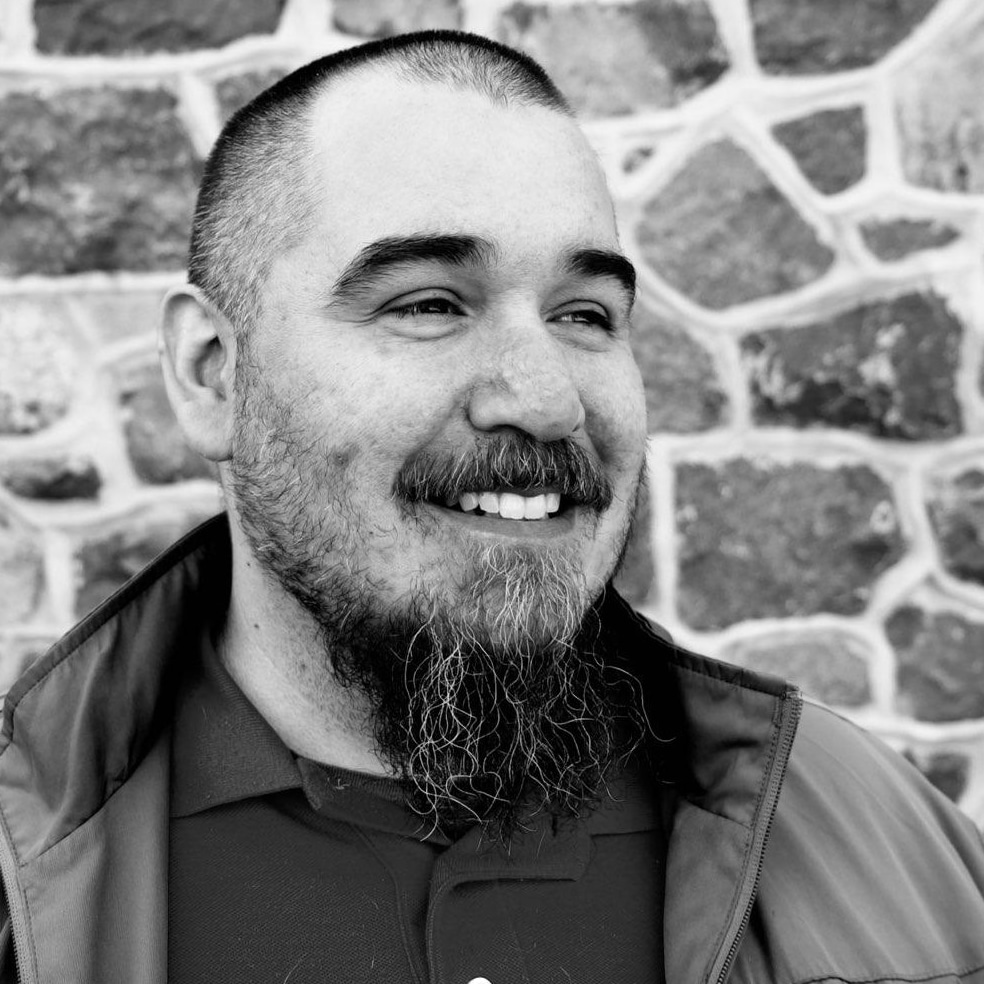
Portrait, 2025
Artist
Oscar Eduardo de Paz
Oscar Eduardo de Paz is a painter born in Chicago, IL with indigenous roots from Guatemala and ancestry in Appalachia. His work centers on identity, structural power, memory, family, labor, and American life, rendered primarily in casein on canvas, with collaged drawings, found objects, and blackout poetry as integral material elements.
The practice is organized through the PSR framework, Poetic, Symbolic, and Realist, creating layered works that move between the intimate and the structural, examining how personal history and collective experience are shaped by systems of power.
De Paz holds a Master's in Public Administration and a BA in Philosophy from West Chester University, and completed Post Master's Research in Environmental Justice at the University of Delaware. He is represented in private collections and held in the collections of Nemours and the Delaware Art Museum. He is based in Wilmington, DE, working out of his studio in the Delaware Contemporary.
Selected Exhibitions
Collections & Commissions
Residencies
Press
Contact
For acquisition inquiries, exhibition opportunities, artist talks, studio visits, public programming, or institutional engagement: